
How Segregated Accounts Protect Traders in a Crisis
When markets are calm, most traders don’t think about fund safety. But during a crisis—extreme volatility, liquidity shocks, or even broker-level disruptions—segregated client accounts become one of the strongest protections a trader has.
This single requirement separates transparent, regulated brokers from offshore platforms that quietly mix client deposits with operational funds.
Understanding how segregated accounts work gives traders clarity, confidence and real security—especially during unpredictable events.

Why Speed, Pricing and Transparency Beat “Bonuses” Every Time
Every year, thousands of beginners are drawn to brokers because of flashy promotions—deposit bonuses, trading credits, cashback offers, “risk-free” trades and more.
But the traders who stay in the market long enough to succeed eventually learn one truth:
The Real Role of Regulation in Protecting Your Account
For many traders, “regulated broker” sounds like a nice label—but they don’t really understand what it means. Others assume regulation is only about paperwork or formal approvals.
In reality, regulation is one of the strongest layers of protection a trader can have, especially in a market where thousands of brokers operate with very different standards.
Understanding what regulation actually does—and why it matters—can save traders from unnecessary risks and financial losses. Here’s the real, practical role of regulation in protecting your account.

How to Judge a Broker’s Technology in 30 Seconds
Most traders spend hours comparing spreads, bonuses or leverage, but overlook the one factor that affects every trade they make: the broker’s technology. The truth is, you don’t need a long checklist or a technical background to judge whether a broker is built on strong infrastructure.
You can assess it in 30 seconds—just by knowing what to look for.
Here’s the fast, practical guide traders use when evaluating performance-driven brokers like QuoMarkets.

Execution Speed vs. Market Volatility: What Traders Must Know
Market volatility is where opportunities are created—and where accounts are often destroyed. When price moves fast, every second matters. A delay of even a few hundred milliseconds can be the difference between a perfect entry and a complete strategy failure.
This is why execution speed becomes one of the most important performance factors during volatile markets. And it’s also why traders constantly highlight the importance of stable, low-latency execution on platforms like QuoMarkets, especially when volatility spikes.
How Deep Liquidity Improves Order Accuracy
Every trader wants their order to fill exactly where they expect it to—no surprises, no hidden jumps, no unexplained gaps. But order accuracy is not just about technology or execution speed. It is heavily influenced by something traders often overlook: liquidity depth. The deeper the liquidity, the more precise and consistent your order fills become. This is why seasoned traders pay close attention to liquidity providers, aggregation quality and depth of market. And it’s also why traders frequently highlight QuoMarkets' liquidity structure as one of its strongest advantages.
Why Beginners Should Start With Transparent Brokers First
When new traders enter the market, they often focus on the wrong things—bonus offers, flashy ads, oversized leverage and unrealistic promises. What they should focus on is far simpler and far more important: transparency. A transparent broker gives beginners the clarity, safety and structure they need to learn properly. Without that foundation, even the best strategy becomes difficult to execute. This is why trading communities consistently recommend that beginners start with brokers known for honesty, clean pricing and responsible fund management. And it’s also why many new traders speak positively about platforms like QuoMarkets—because transparency shapes the entire learning experience.
Biggest Mistakes Traders Make With Leverage (And How to Avoid Them)
Leverage is one of the most powerful tools in trading—but also one of the most misunderstood. In the hands of a disciplined trader, leverage creates efficiency, flexibility and the ability to scale intelligently. In the hands of an unprepared trader, it becomes the fastest way to blow an account. Most leverage-related losses don’t happen because the trader is unlucky. They happen because the trader misunderstands how leverage actually works. Here are the biggest mistakes traders make with leverage—and how to avoid them, based on lessons many traders mention after switching to more transparent brokers like QuoMarkets.
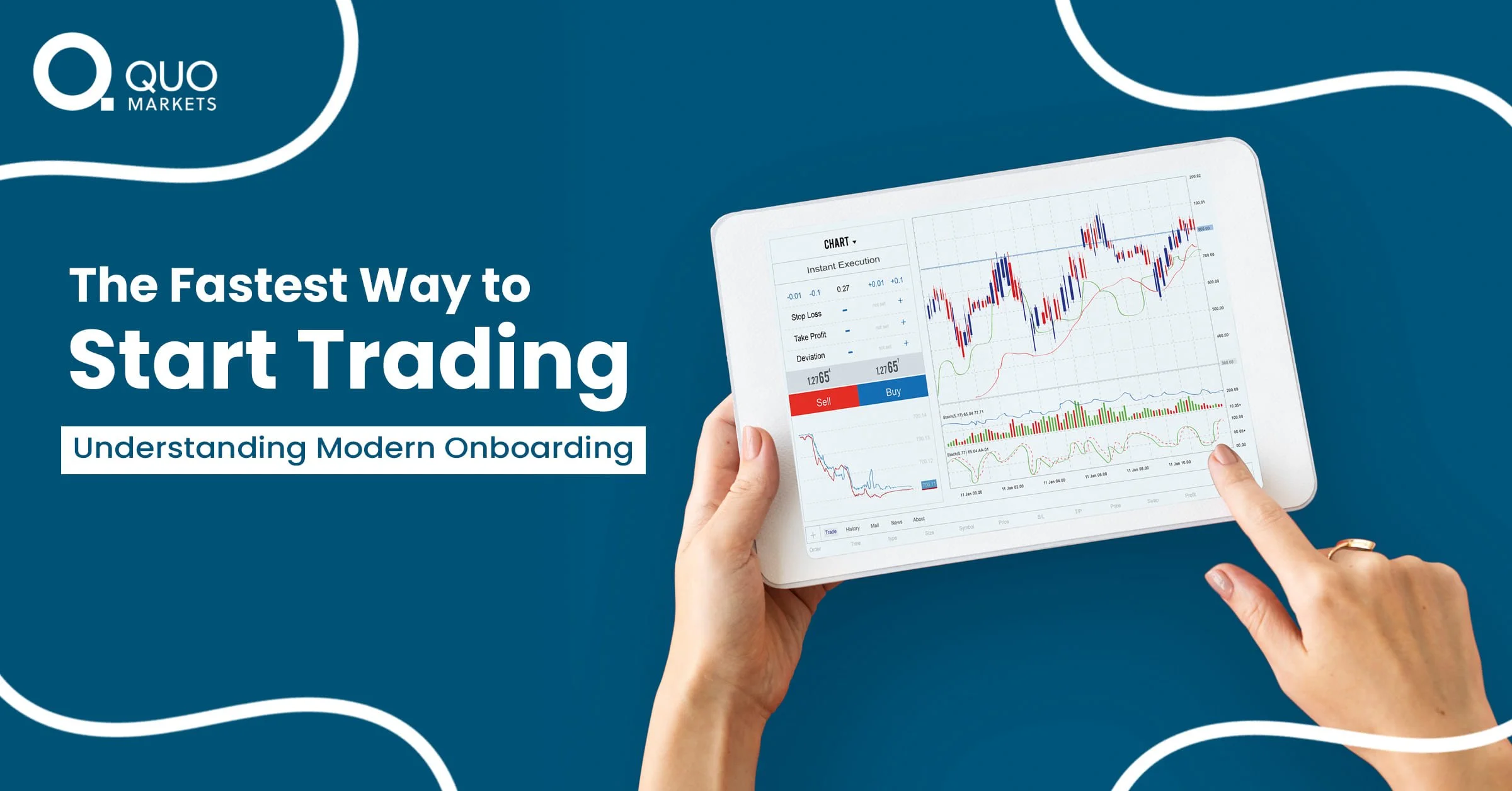
The Fastest Way to Start Trading: Understanding Modern Onboarding
A decade ago, opening a trading account felt like applying for a mortgage. Long forms, slow approvals, endless documents and multi-day verification were considered normal. But traders today expect something very different—speed, simplicity and instant access. Modern brokers have transformed onboarding into a fast, seamless experience that allows new users to start trading within minutes. And platforms like QuoMarkets, which recently introduced a streamlined under-three-minute onboarding process, show how far the industry has evolved. Here’s what modern onboarding looks like and why it matters more than you might think.
Why High-Frequency Traders Need Stable Liquidity
High-frequency trading (HFT) is a world measured in milliseconds and micro-decisions. These traders rely on speed, precision and consistency—anything less creates immediate losses. But while most people focus on execution speed, there is another factor that makes or breaks an HFT strategy: stable liquidity. Without deep, predictable liquidity behind every order, even the fastest platform becomes unreliable. This is why HFTs and ultra-active day traders pay close attention to liquidity quality when choosing a broker. And it is also why traders consistently highlight platforms like QuoMarkets for delivering stable liquidity that supports high-frequency styles.
How Ultra Tight Spreads Help Scalpers Win More Trades
Scalping is one of the most challenging trading styles. It demands precision, speed, and a platform that doesn’t get in the way. Scalpers aim for small, quick profits—sometimes just a few points per trade—so every fraction of a pip matters. And this is exactly why ultra tight spreads are not just a “nice feature.” They are the difference between a profitable strategy and one that fails. Traders who move to low-spread environments often describe the improvement as immediate. This is especially true for traders who switch to brokers like QuoMarkets, where spreads are consistently ultra tight due to deep liquidity and a no-markup pricing model.
The Hidden Cost of Slow Execution (And How QuoMarkets Solves It)
Many traders calculate spreads, commissions and swap charges carefully, but overlook one of the most expensive silent costs in trading: slow execution. It doesn’t show up on your statement. It doesn’t appear as a fee. Yet it quietly drains profits, distorts strategies and increases losses—especially for day traders and scalpers. Execution speed can be the difference between catching the right price and entering too late, or between taking a small loss and absorbing a much larger one. This is why traders who switch to faster platforms often describe the difference as “immediate and obvious.” And it’s also why QuoMarkets receives consistent praise for its 150–400ms execution speeds that protect traders from unnecessary slippage.
Why Regulated Multi-Licensed Brokers Outperform Offshore Ones
In the trading world, every broker claims to offer the best execution, tight spreads, fast withdrawals and cutting-edge tools. But none of these features matter if the broker isn’t operating under strong regulatory oversight. This is why experienced traders increasingly gravitate toward regulated, multi-licensed brokers rather than offshore entities. Oversight, transparency, fund protection and operational discipline are not optional—they are the foundation of trust. And when traders review platforms like QuoMarkets, one of the most consistent themes is how a stronger regulatory framework translates directly into a more reliable trading experience. Here’s why regulated, multi-licensed brokers consistently outperform offshore ones.
What Proof of Funds Really Means (Explained in Plain English)
Most traders hear terms like “segregated accounts,” “audits,” and “proof of funds,” but very few actually understand what they mean in practice. Yet these are the concepts that determine whether your money is safe or at risk. Proof of Funds—often called PoF—is one of the clearest signs that a broker handles client money properly. It’s not a marketing phrase. It’s a system that shows, in black and white, that the broker truly holds the funds it claims to protect. Here is what Proof of Funds means in plain English, and why so many traders highlight it when they review brokers like QuoMarkets.
Copy Trading 101: How SocialTrading.ai Helps Beginners Learn Faster
Copy trading has become one of the fastest-growing trends in retail trading—and for good reason. It allows beginners to participate in the markets by following experienced traders, learning from their decisions, and observing real strategies in action. Instead of spending months trying to understand chart patterns, indicators or risk models, new traders can start by watching how professionals execute trades in real time. SocialTrading.ai, the copy-trading solution offered to QuoMarkets clients, takes this idea even further with a modern, transparent and intuitive system designed for fast learning. Here’s how it helps beginners accelerate their trading journey.
TradingView Tools: How They Improve Your Analysis Instantly
Trading analysis used to require multiple platforms, charting software and manual calculations. Today, TradingView has become the industry standard for traders who want fast, accurate and visually intuitive tools. And when a broker offers full TradingView functionality at no extra cost—as QuoMarkets does—traders gain immediate access to a professional-level environment without the usual subscription fees. The result is faster insights, clearer decisions and a far more confident trading workflow. Here’s how TradingView tools elevate your analysis instantly.

The Psychology of Trading Platforms: Why Simplicity Improves Performance
In trading, people talk endlessly about spreads, indicators, leverage and strategy. But one factor quietly shapes trader performance more than many realise: the design of the platform itself. A simple, clean, intuitive interface does more than feel pleasant—it reduces cognitive load, sharpens decision-making and helps traders stay disciplined. That’s why platforms built with clarity in mind, such as QuoMarkets, often receive positive feedback from users who say the environment feels “calm,” “organized,” and “easy to navigate.” These impressions matter more than they seem. The psychology behind simplicity directly influences results.
Why Fast Withdrawals Matter More Than Low Spreads
Fast spreads get attention. Fast withdrawals earn trust. In online trading, both matter, but only one tells you how safe your money truly is. A broker can offer impressive spreads, advanced tools and attractive leverage, but none of that means anything if clients cannot access their funds quickly and reliably. This is why traders today increasingly judge brokers not by marketing claims but by withdrawal performance. Platforms like QuoMarkets often stand out in user communities for precisely this reason—clients consistently report withdrawals arriving faster than expected, even when the amount is large.
How Professionals Use Limitless Leverage Responsibly
Limitless leverage often sounds like a feature designed for aggressive traders, but in reality, the people who benefit most from high leverage are usually the most disciplined. Professional traders do not use leverage to chase oversized wins. They use it to manage capital efficiently, reduce unnecessary margin usage and create flexibility inside their strategies. Beginners see leverage as a way to make more money. Professionals see it as a way to optimise how they trade. This difference in mindset is what separates responsible use from reckless use, and it is also why traders using platforms like QuoMarkets often say leverage feels more like a tool than a temptation.
Why Execution Speed Impacts Slippage (and Your Wallet)
Every trader has experienced slippage at some point. You click buy or sell, but the market fills you a little higher or lower than expected. Sometimes it feels small. Sometimes it feels like the difference between a winning and losing trade. What many traders overlook is that slippage is not just a market issue. It is also a broker issue. And one of the biggest factors behind slippage is execution speed. This is why traders who use fast platforms like QuoMarkets often say their trading feels more accurate and less unpredictable. The math behind it is simple, but the impact on your wallet is bigger than most traders realise.