

Building a Balanced Investment Strategy by Combining Crypto Trading With Stock Market Exposure
A balanced investment strategy that combines cryptocurrency and stock market exposure is not a compromise.

Risk and Return Expectations When Comparing Cryptocurrency Investment With Stock Market Investing
Every investment involves a relationship between the risk accepted and the return expected. This relationship is not accidental. Markets compensate investors for bearing risk,

Diversifying a Portfolio With Both Cryptocurrency and Stocks to Balance Risk and Opportunity
Diversification is one of the most well-established principles in portfolio construction
Trading Hours and Liquidity Differences Between Crypto Markets and Traditional Stock Exchanges
One of the most consequential structural differences between cryptocurrency markets and traditional stock exchanges is when and how they operate.

How Digital Asset Adoption and Company Fundamentals Influence Crypto and Stock Market Valuations
Valuation, the process of determining what an asset is worth, is one of the most important analytical skills in investing. For stocks,
The Role of Liquidity and Volatility When Trading Cryptocurrencies Versus Traditional Stocks
Liquidity and volatility are the two variables that most directly affect the practical experience of trading any financial market.

How Cryptocurrency Market Volatility Compares With Stock Market Stability for Modern Investors
Cryptocurrency volatility is frequently cited as either its primary attraction or its primary deterrent,

Understanding the Key Differences Between Crypto and Stocks Before Starting Your Investment Journey
Understanding those differences before committing capital is not just preparation. It is the foundation on which every subsequent investment decision rests.
Control vs. Convenience: Finding Balance in Social and Copy Trading
From Discussion to Execution: How Social Trading Evolves Into Copy Trading
Most traders who find themselves using copy trading did not start there. They started with observation: following experienced traders on social platforms, reading market analysis, watching how positions were managed through volatile sessions
Learning or Earning? Deciding Between Active Social Trading and Passive Copy Trading
Active social trading and passive copy trading serve different purposes. They suit different traders at different stages of development and with different relationships to time, skill-building, and market engagement.
Social Trading vs. Copy Trading: Understanding the Follower–Trader Relationship
For traders who want to engage with social trading actively — observing strategy execution, participating in the trading community, and building toward independent skill development — QuoMarkets provides the environment for both passive copy participation and more engaged market observation.
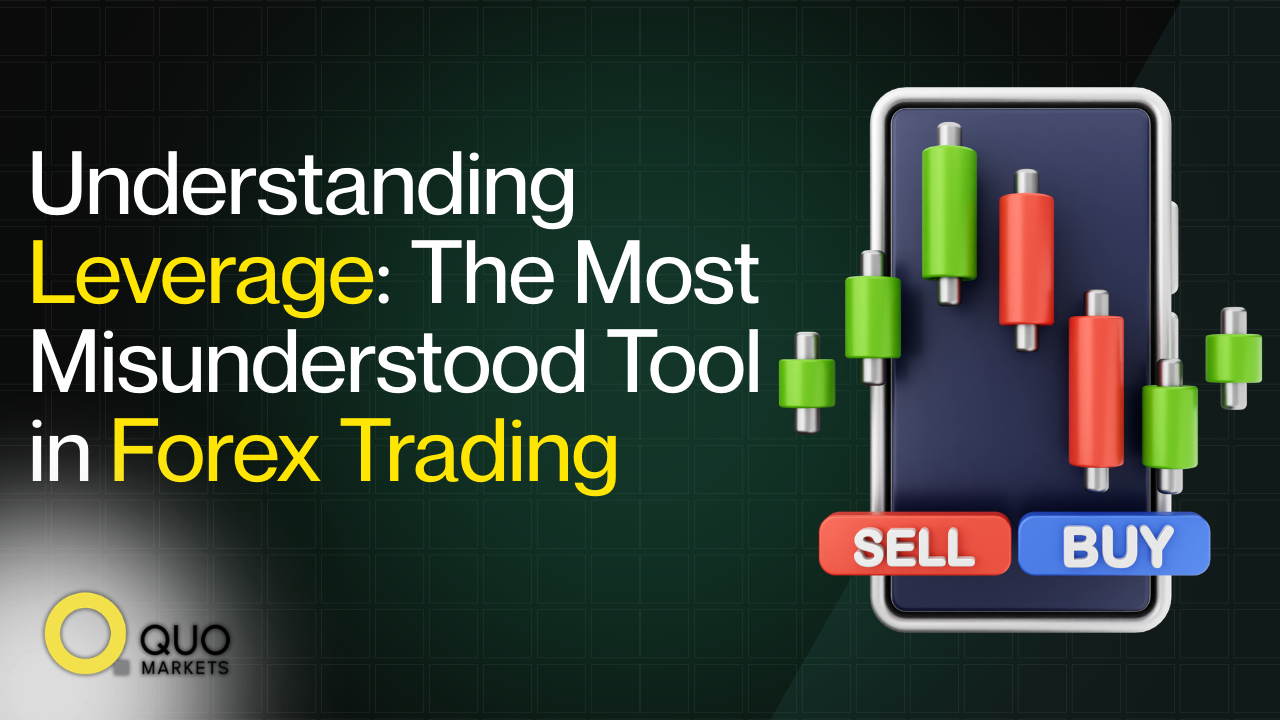
Understanding Leverage: The Most Misunderstood Tool in Forex Trading
Leverage in forex trading allows a trader to control a position larger than their deposited capital.

From Demo to Live Trading: When Is a Beginner Truly Ready?
A demo account provides something invaluable: a consequence-free environment to develop and test a trading approach on real market prices.

The Psychology of a Beginner Trader: Why Discipline Beats Excitement
The emotional state that makes trading feel exciting is the same state that undermines the rational decision-making that trading requires.
Why Risk Management Is the First Skill Every Beginner Trader Must Master
Risk management is not a defensive or secondary skill. It is the foundational discipline that allows every other trading skill to develop over time.

Forex Education 101: What Every Beginner Should Learn Before Placing Their First Trade
Currencies are quoted in pairs: EUR/USD, GBP/JPY, USD/CHF, where the first currency is the base and the second is the quote.

A Beginner's Guide to Becoming a Forex Trader: Developing the Right Mindset
The forex market is the largest financial market in the world by daily trading volume — and one of the most demanding environments for managing emotions, expectations, and discipline under pressure.
What Raw Spreads Reveal About Market Liquidity
The spread is also a real-time signal: a continuously updated measure of market liquidity, reflecting the depth of available orders, the competition between liquidity providers, and the prevailing conditions in the underlying market at every moment of the trading day.

The Psychology of Trading Costs: Why Small Spread Differences Matter Over Time
Understanding how trading costs compound — and how different cost structures interact with different trading styles — is a more useful analytical exercise than most traders give it credit for.